
Decking oil vs staining: which is right for your deck?
For treating timber decks, both stain and oil have their advantages. Oil is absorbed into the wood to bring out the natural grain, but stains sit on top of the wood to provide long-lasting colour. The best choice will depend on the type of timber your deck is made from and the look you want, as well as how you want things to hold up against Brisbane's sun and humidity.
For instance, if you have a blackbutt deck and you want to maintain its honey-toned appearance, oil might be the best option. If your pine deck appears worn out and you're open to a darker shade, stain could be the better choice. Selecting the right treatment from the start can save you from having to redo everything in a couple of years.
If you're not sure which product to use, DC Decorators offers professional services throughout Brisbane and the surrounding areas, from the Gold Coast to the Sunshine Coast. We can visit your site and recommend the best solution for your specific timber boards.
What's the difference between decking oil and decking stain?

Decking oil
Oil provides a penetrating finish to wooden surfaces by absorbing into the timber, leaving a natural, nearly untouched appearance as a finish. Clear oils enhance the wood's original grain and colour, while tinted oils offer a subtle shade and provide extra protection against UV rays. Unlike finishes that form a layer on top, oil-treated decks do not peel over time, but they gently fade and can be easily refreshed with additional applications.
Decking stain
Stain acts more like a coating. It contains more pigment than oil, and this creates a thin layer on the surface, which leads to a noticeable change in the colour of the boards and a smoother, more finished appearance. Stains range from semi-transparent finishes, which allow the natural grain to be visible, to almost solid colours. This film provides enhanced coverage and long-lasting protection. However, over time, it may start to peel or flake as it wears, instead of merely fading away.
How decking oil and stain protect against UV, moisture and mould
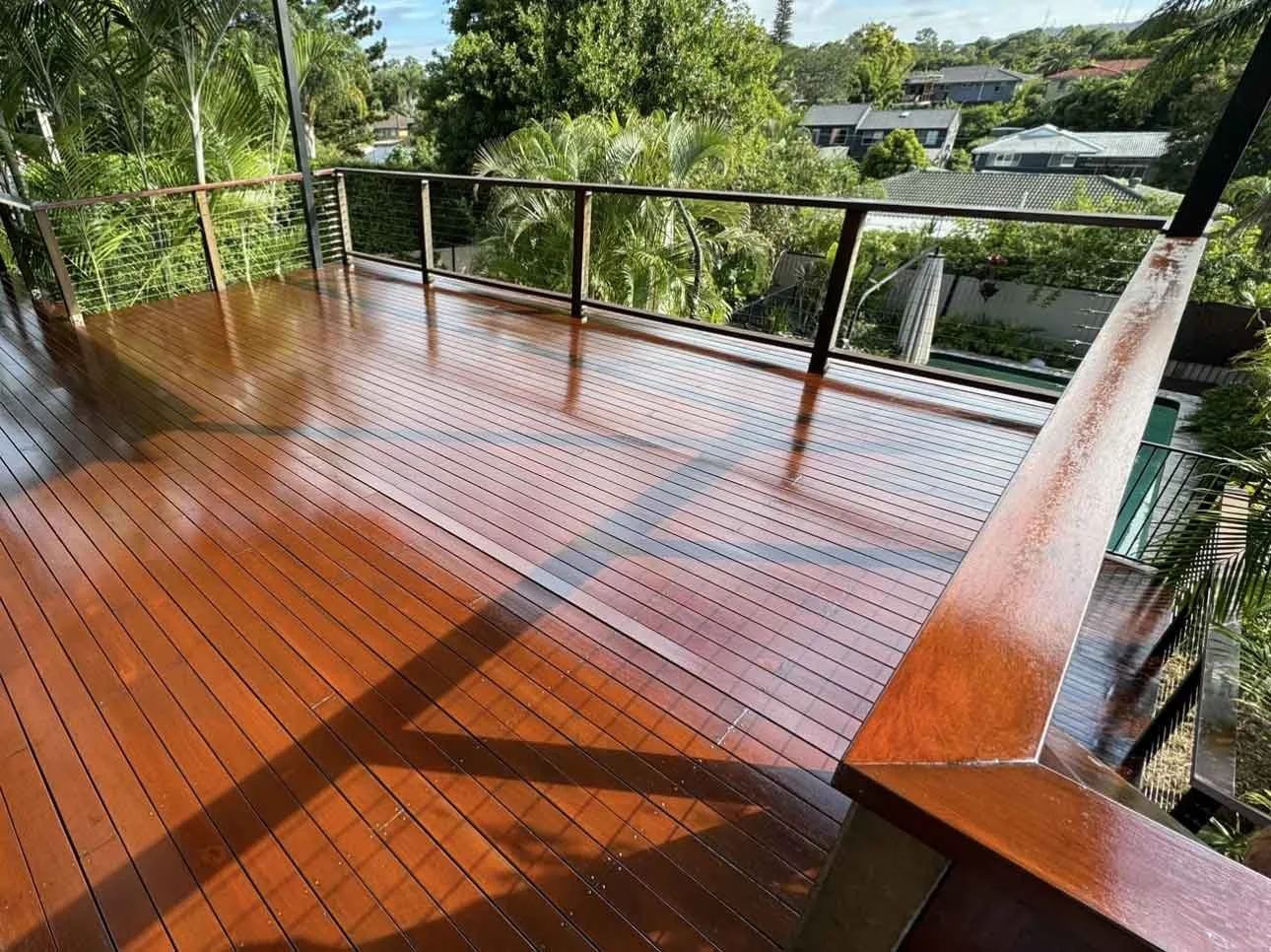
Timber finds it hard to cope with the weather in Brisbane. The UV rays are intense throughout the year, not just during summer, and that is the number one factor that contributes to the breakdown of the deck surface. The UV rays grey out the wood and cause the fibres to become brittle. Also, your timber will face high humidity levels and afternoon showers rolling through from November, which means that the wood will be damp most of the year.
When it comes to protecting your deck, both oil and stain have their benefits, though they differ in how well they perform. Deck oils often come with UV filters, and those containing pigments offer superior protection against sunlight. The pigments act like a shield, blocking harmful UV rays. Although clear oils can beautifully enhance the natural look of the wood, they don't guard against UV damage as effectively. This means you will need to apply them more often, particularly if your deck is in a spot that gets a lot of sun.
A pigmented stain offers excellent UV protection due to its high pigment content, which forms a protective layer on the surface. This layer not only guards against the sun but also acts as a barrier to moisture. By keeping moisture out, the stain helps prevent the cracks and warping that occur when boards expand and contract during wet and dry periods.
When moisture gets trapped in wood, it can actually encourage mould growth, so it's crucial to choose the right finish. Before applying any product, make sure your deck is thoroughly cleaned and completely dry. Opting for a stain with built-in mould resistance is a smart choice, especially for decks that are shaded and face south, as these areas tend to remain damp.
How decking oil and stain look: natural grain vs added colour
The look is where a lot of people make their decision, and it's a fair place to start. Oil enhances the natural grain and deepens the existing colour of the timber without hiding it. On a hardwood like spotted gum or blackbutt, that means the wood grain and natural beauty of the boards stay front and centre. If you love the timber you chose and want to enhance the natural tones rather than change them, oil is the way to keep that natural look.
Stain gives you more control over the end result. It comes in a range from a semi transparent matt finish that still lets some grain show through, to more solid colours that largely cover it. You can warm up a pale deck or bring a mismatched one to a more even colour to suit the house. If you want to add colour or change the colour of the boards, stain is the product that gets you there. The more pigment you add, the less of the natural grain you'll see.
Decking oil vs stain: durability, drying time and maintenance
Penetrating oil is a great choice for a finish because it doesn’t leave behind a hard film that can peel or flake over time. Instead, it wears away gradually and evenly, which makes maintenance more straightforward. When it’s time for a refresh, you usually just need to clean the surface and apply a new coat. However, the downside is that you'll need to reapply it more often. Under the intense Brisbane sun, an oiled deck might require a new coat annually, and even more frequently on the northern and western sides, which receive the most direct sunlight.
Stains on a deck typically last between two to four years, with durability influenced by the specific product used and the amount of foot traffic and sun exposure the deck receives. Because the stain rests mostly on the surface, it may eventually peel or flake at the edges as it deteriorates. When this happens, fixing it requires a bit more effort. Instead of just washing and reapplying the stain, you will likely need to sand or strip away the areas where the stain has failed before you can recoat.
It's important to consider drying time when planning your project. For water-based oils and stains, they typically become touch dry within one to two hours. However, it's best to avoid walking on them for at least 24 hours and wait even longer before placing any furniture back on the deck. If you're using oil-based products, expect an even longer drying period. In Brisbane's humid climate, drying times can extend beyond what's indicated on the packaging, so allow for additional time to ensure everything is completely dry.
As far as maintenance goes, an oiled deck is lower fuss per session but needs doing more often. A stained deck is more work when it does need doing, but you do it less frequently. Neither is truly set-and-forget in this climate.
Should you oil or stain hardwood, treated pine or new decking?
Hardwood decking materials such as spotted gum, blackbutt, merbau, and ironbark absorb oil exceptionally well. Known for their density and natural oils, these woods manage to retain their colour quite effectively. Many homeowners prefer using penetrating oil to highlight these qualities, as it enhances the wood's natural beauty.
While stains can be applied to hardwood, they often conceal the attractive appearance of the bare timber, which is less appealing to those who appreciate the wood's inherent charm. For high-end timbers like teak, oil is almost always the preferred choice, as it brings out the wood's luxurious finish.
Treated pine is different. With its characteristic green tint and simple grain, it lacks the same beauty found in hardwoods. Staining pine enhances its appearance by adding warmth and depth to its otherwise plain look, and this approach works well because it allows you to build upon a blank canvas, rather than covering up features.
When it comes to a new deck, it's important to exercise a little patience, regardless of the type of wood it is made from. Freshly milled hardwood, in particular, often comes with a mill glaze and surface oils that prevent finishes from penetrating effectively. Most decking oils and stains are designed to work best after the boards have had a chance to weather for a few weeks or even months.
This waiting period allows the wood to open up, and this ensures the coating adheres properly. If you apply a finish too soon, it can lead to premature failure, and if you're dealing with a brand-new deck, it's always best to check the manufacturer’s guidelines to work out the best time to apply a finish.
Decking oil or stain: which should you choose?
If you have a hardwood deck and want to maintain its natural appearance, use oil. It requires annual reapplication, but the process is easy and doesn't involve stripping the previous layer. Oil suits those who value showcasing the beauty of the timber and prefer uncomplicated maintenance, even if it means more frequent attention.
When you're aiming to add colour or extend the time between applications on your wood surfaces, choose stain. This is especially true if you're dealing with treated pine or a type of timber that doesn't hold sentimental value. Stain performs particularly well on decks exposed to intense sunlight or those positioned in the shade, where mould might be an issue. The added pigment and protective layer offer extra resilience against these challenging conditions, ensuring your deck stays in good shape longer.
If your deck basks in the intense Brisbane sun, choosing a quality pigmented stain can help extend the time between recoating. If you want to showcase the natural beauty of the timber, oil is the way to go, as it highlights the wood's authentic charm. While no single product fits every deck, thinking about the type of timber and its level of sun exposure will help you make the right choice for your situation.
Ready to oil or stain your deck?
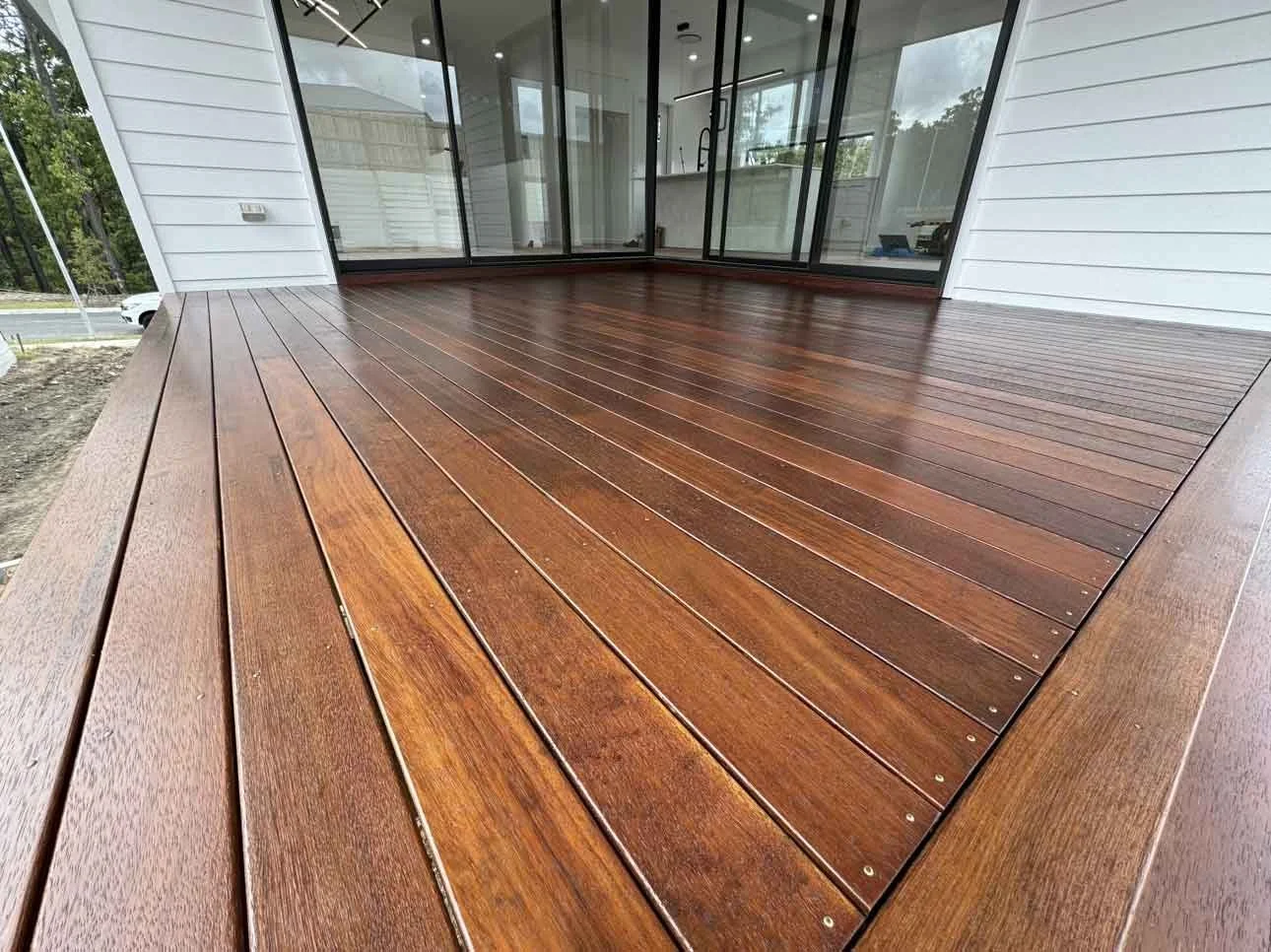
If you've made a decision or are still choosing between options, let us evaluate your choice by considering several factors. We'll look at the type of timber, the amount of sunlight and shade your deck receives, the level of maintenance you're prepared to handle, and the look you’re after. This way, you can be confident in your selection before anything goes on the boards.
DC Decorators is a trusted name in painting and decorating and holds a QBCC license (15331027). We serve the Brisbane area, extending to both the Gold Coast and the Sunshine Coast. Our decking projects come with a five-year warranty and a promise of satisfaction. Just share a photo of your deck with us, and we’ll provide you with a personalised quote within 24 hours.
FAQs
-
Yes, but it's rarely as simple as coating over the top, and this is the bit that catches people out. It is hard for oil and stains to combine with each other, and the change from oil to stain and vice versa normally requires stripping and sanding down to bare wood. That takes both time and money, as you’re not just painting over an existing finish.
-
When it comes to new wood, it may only require cleaning rather than sanding, but sanding first allows the wood’s grain to open up and let the coating soak in. However, when dealing with old wood and a coating that is flaking off, sanding will be necessary to make sure the product sticks. In any case, the wood will need to be cleaned and dried prior to applying the coating.
-
It all depends on what your requirements are. Deck paint gives you maximum UV protection and colour coverage, and it is also highly durable, but the film that is created is thick and will be visible on top of the board surface, covering up the wood completely. This film can flake under heavy use, too. For most people who choose a timber deck for the timber, oil or stain keeps the natural look that paint covers over.
-
No. Both require dry wood in order to absorb properly. A wet or damp surface is a frequent cause for failure when applying a coat. In general, you should allow between 24 and 48 hours of dry weather to pass after rain or cleaning. If you don’t, applying the coating while there is still moisture trapped in the wood may result in an uneven final surface and encourage mould to grow beneath it.
-
It normally takes around one or two hours for most oils and stains that are used in deck sealing to dry, but you should avoid any foot traffic for a complete 24 hours as the coat sets. Furniture and pot plants should be kept off the wood for 48 to 72 hours so as not to damage the surface while it is setting. In Brisbane humidity, err on the longer side, since everything dries slower than the label suggests before it's fully dry.